Geotechnical engineering, also known as geotechnics, is the branch of civil engineering concerned with the engineering behavior of earth materials. It uses the principles of soil mechanics and rock mechanics to solve its engineering problems. It also relies on knowledge of geology, hydrology, geophysics, and other related sciences.
Geotechnical engineering has applications in military engineering, mining engineering, petroleum engineering, coastal engineering, and offshore construction. The fields of geotechnical engineering and engineering geology have overlapping knowledge areas. However, while geotechnical engineering is a specialty of civil engineering, engineering geology is a specialty of geology.
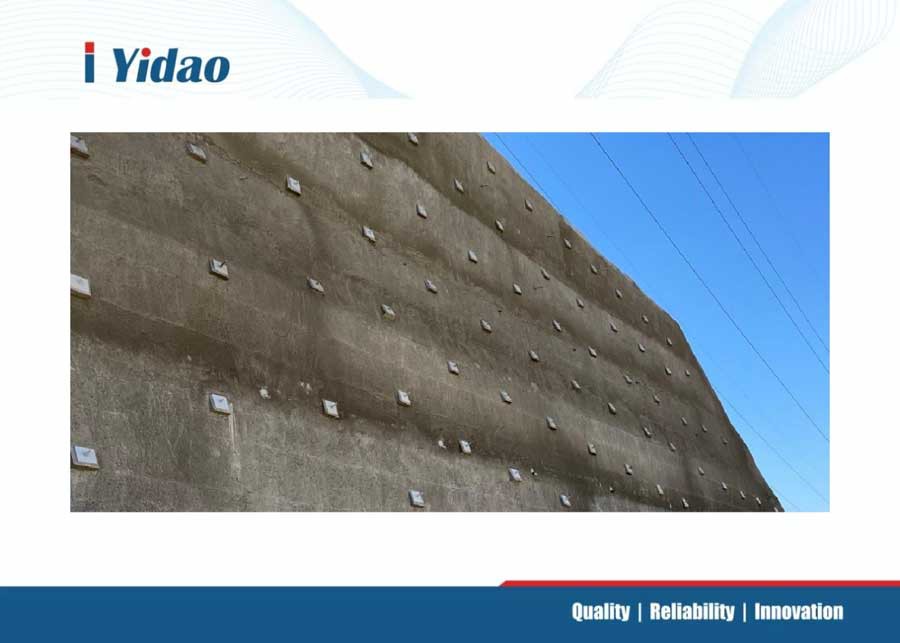
Geotechnical engineers investigate and determine the properties of subsurface conditions and materials. They also design corresponding earthworks and retaining structures, tunnels, and structure foundations, and may supervise and evaluate sites, which may further involve site monitoring as well as the risk assessment and mitigation of natural hazards.
Geotechnical engineers and engineering geologists perform geotechnical investigations to obtain information on the physical properties of soil and rock underlying and adjacent to a site to design earthworks and foundations for proposed structures and for the repair of distress to earthworks and structures caused by subsurface conditions. Geotechnical investigations involve surface and subsurface exploration of a site, often including subsurface sampling and laboratory testing of retrieved soil samples. Sometimes, geophysical methods are also used to obtain data, which include measurement of seismic waves (pressure, shear, and Rayleigh waves), surface-wave methods and downhole methods, and electromagnetic surveys (magnetometer, resistivity, and ground-penetrating radar). Electrical tomography can be used to survey soil and rock properties and existing underground infrastructure in construction projects.
Surface exploration can include on-foot surveys, geological mapping, geophysical methods, and photogrammetry. Geological mapping and interpretation of geomorphology are typically completed in consultation with a geologist or engineering geologist. Subsurface exploration usually involves in-situ testing (for example, the standard penetration test and cone penetration test). The digging of test pits and trenching (particularly for locating faults and slide planes) may also be used to learn about soil conditions at depth. Large-diameter borings are rarely used due to safety concerns and expense. Still, they are sometimes used to allow a geologist or engineer to be lowered into the borehole for direct visual and manual examination of the soil and rock stratigraphy.
Various soil samplers exist to meet the needs of different engineering projects. The standard penetration test, which uses a thick-walled split spoon sampler, is the most common way to collect disturbed samples. Piston samplers, employing a thin-walled tube, are most commonly used to collect less disturbed samples. More advanced methods, such as the Sherbrooke block sampler, are superior but expensive. Coring frozen ground provides high-quality undisturbed samples from ground conditions, such as fill, sand, moraine, and rock fracture zones.
Geotechnical centrifuge modeling is another method of testing physical-scale models of geotechnical problems. The use of a centrifuge enhances the similarity of the scale model tests involving soil because soil's strength and stiffness are susceptible to the confining pressure. The centrifugal acceleration allows a researcher to obtain large (prototype-scale) stresses in small physical models.
 BACK


